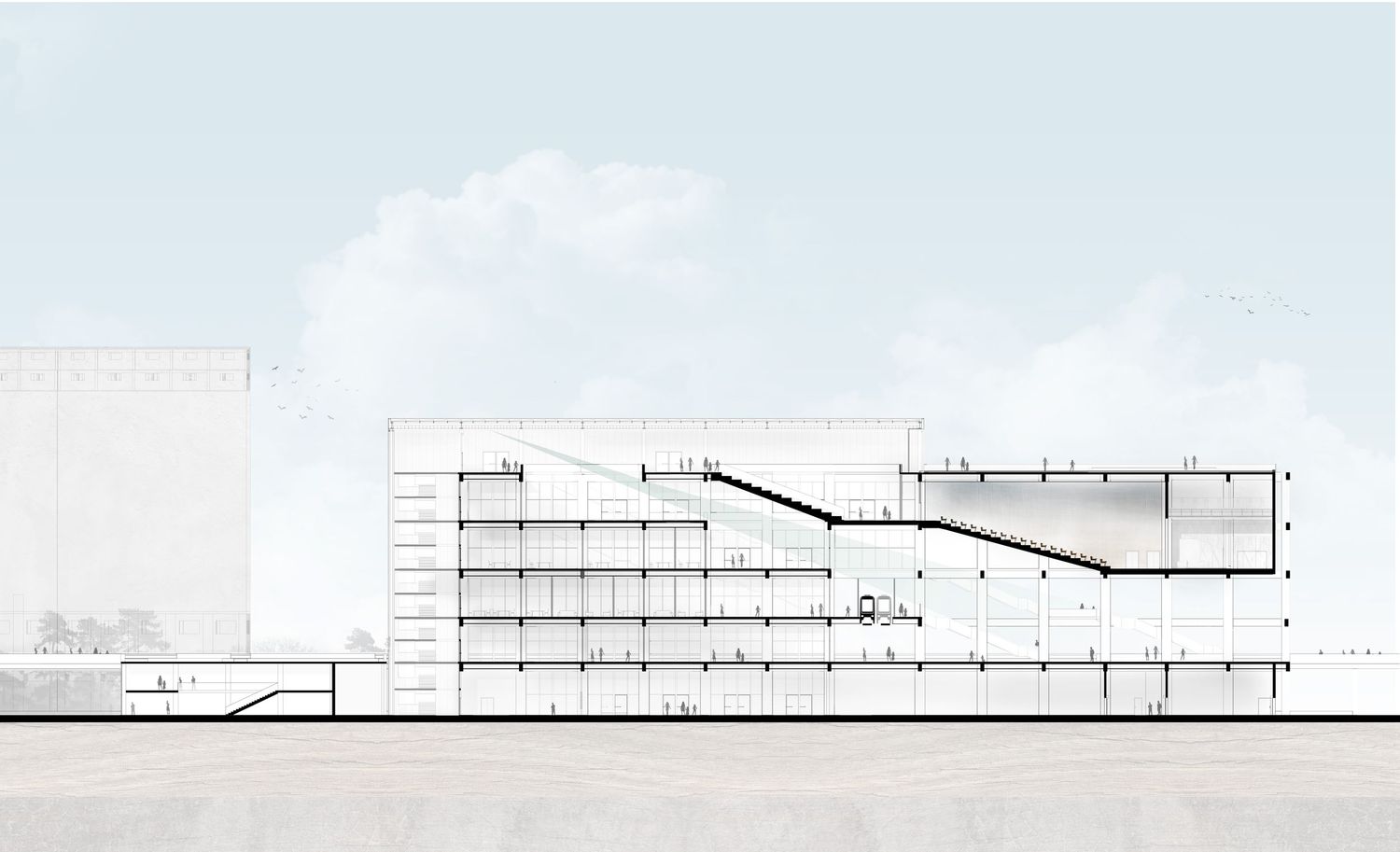
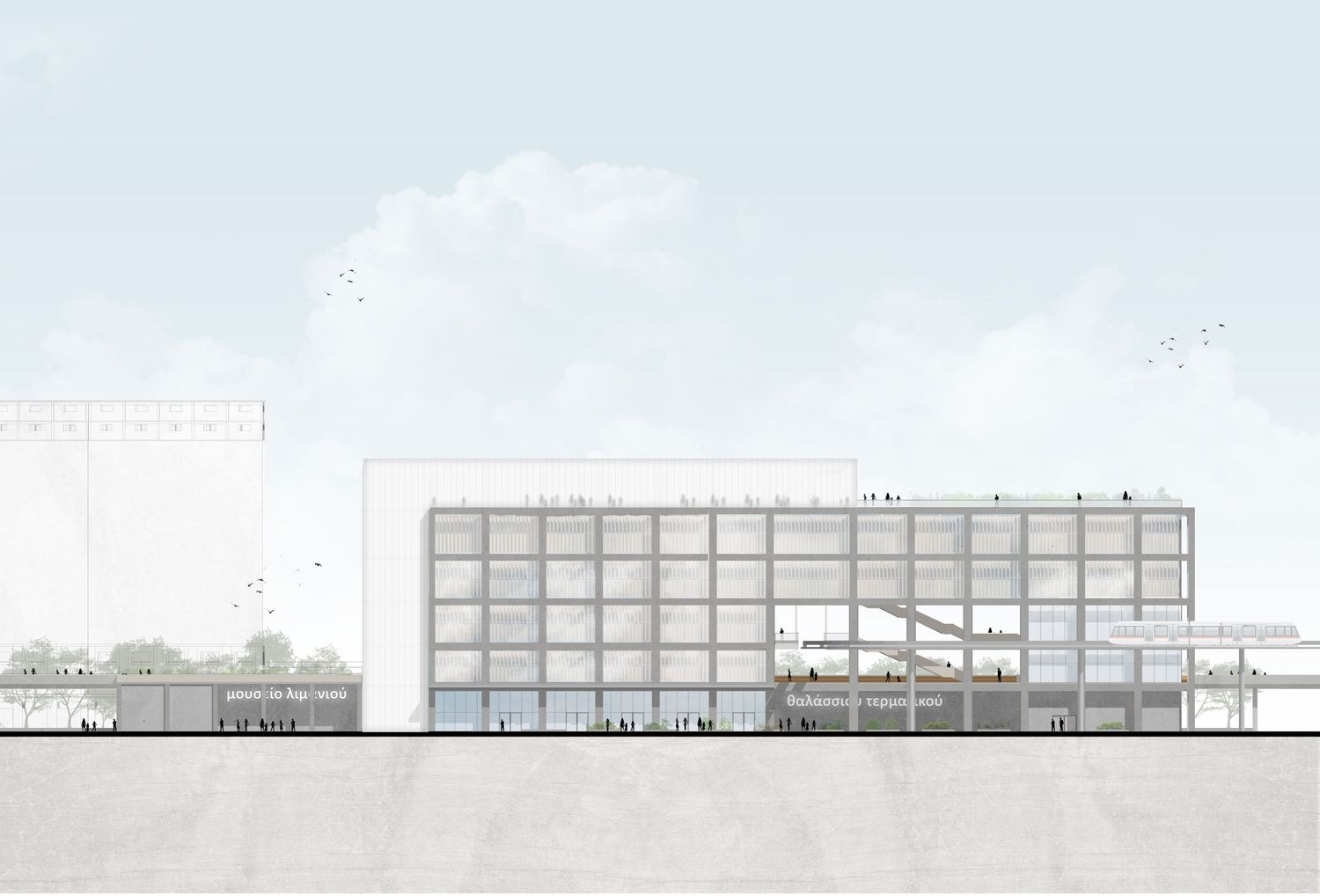
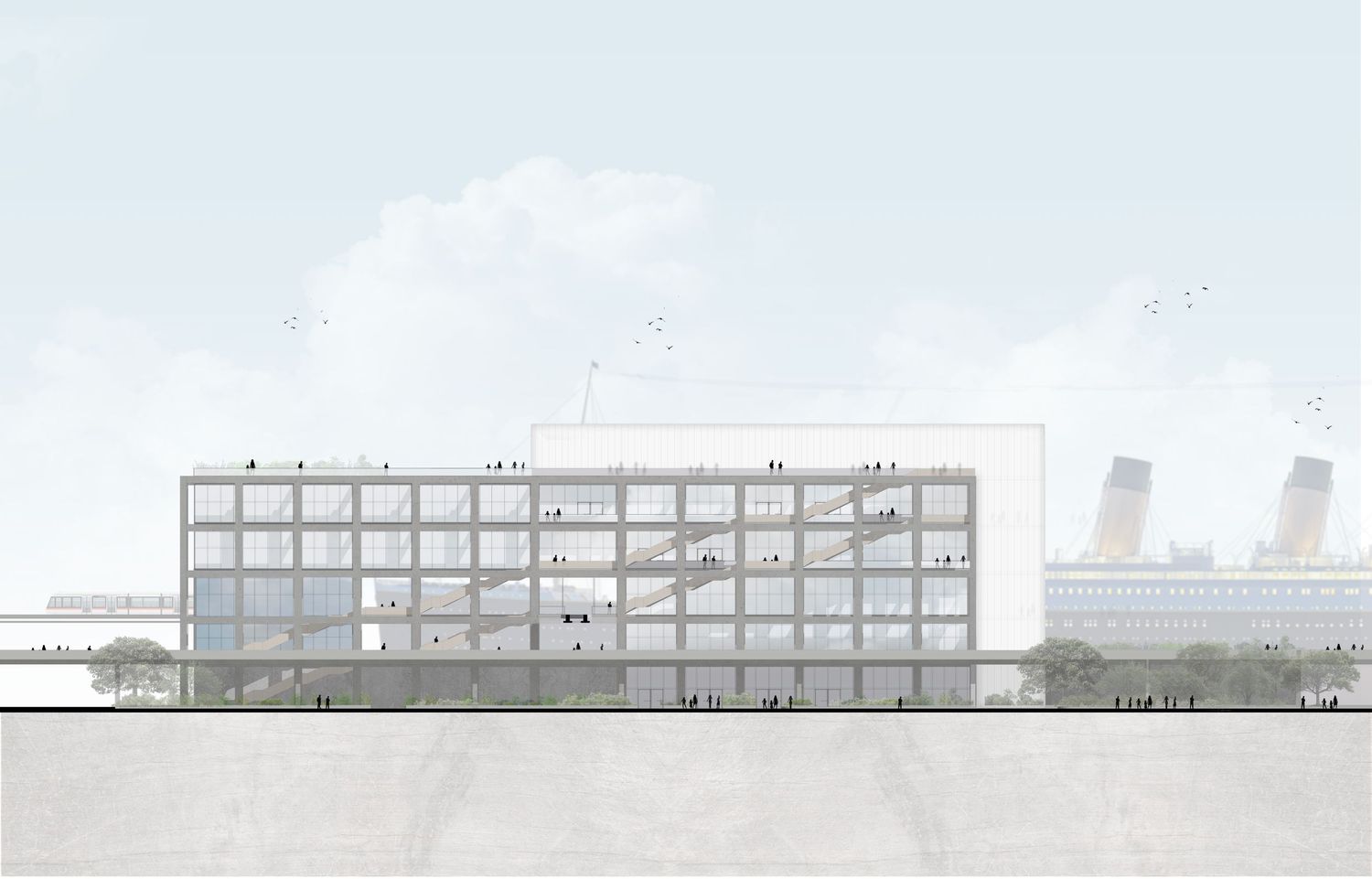
maritime station and cultural venue
TRANSFORMATION OF INDUSTRIAL HERITAGE
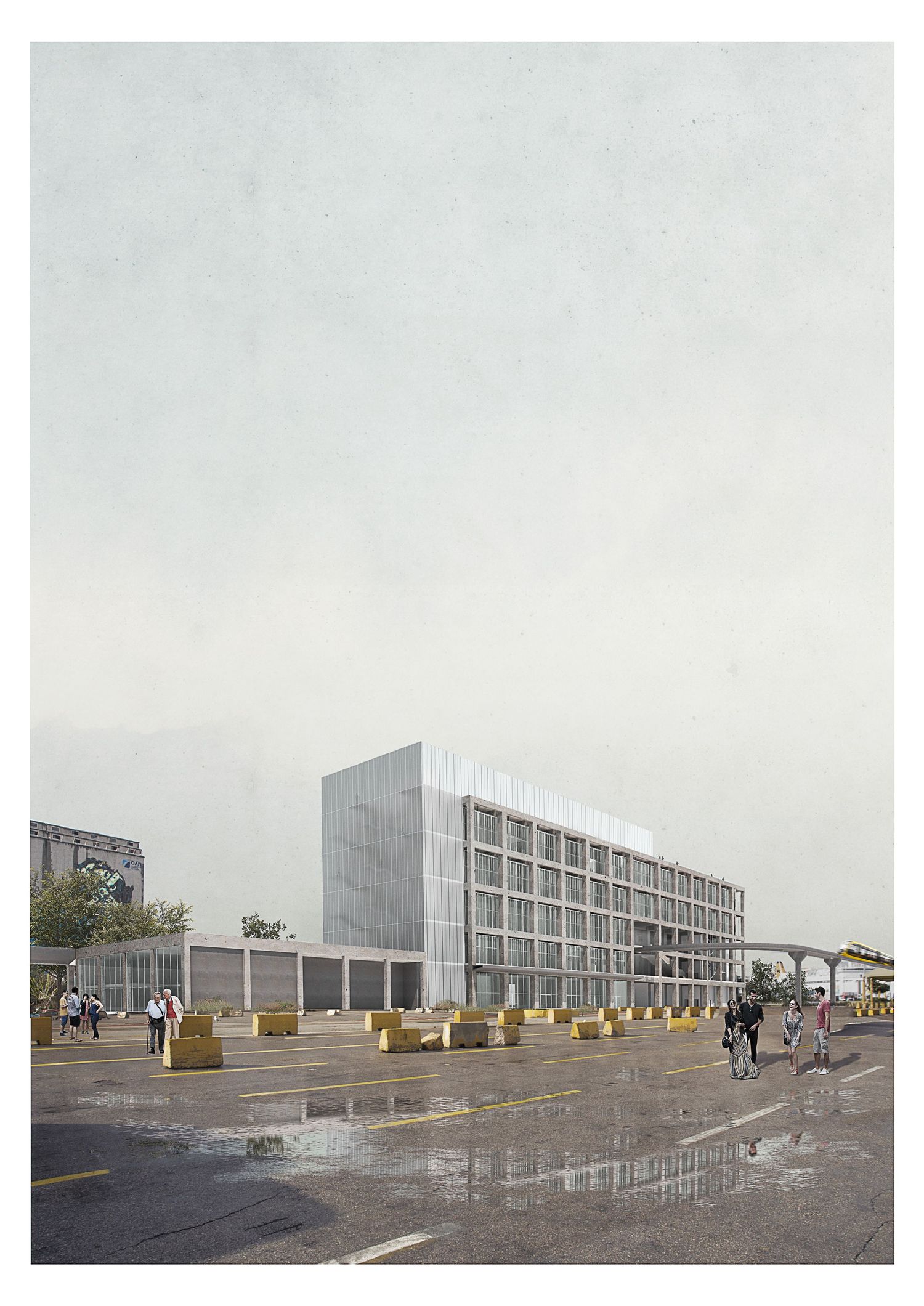
The building constitutes an opportunity to enhance a forgotten heritage serving the issues and main users of Ietionia quay and Piraeus port.
By mixing and making interact activities that concern as much the
as local residents or visitors, the currently unused building has the
a symbol and an attractive place for the port.
Supported by public and private investments already planned for
this part of the port as well as by maritime transport funding, the warehouse conversion favors users and the port’s identity in an economy of means corresponding to Greece’s economic and identity crisis context.
Gathering diverse uses and users in a single building becomes a strong point of the intervention and allows the creation of new interactions between residents and passengers of Piraeus port.
As a «cultural terminal», the warehouse will gather activities related to the site’s temporalities that will make it live at different moments of the day and evening.
It will include a naval history museum that will complement the future underwater antiquities museum that will soon be installed in the silo, as well as a library and a multimodal hall (concert, congress, show and projection) planned in the city and authorities’ investment plan.
A passenger waiting terminal, directly connected to the monorail station, will occupy the most important part of the building and will be financed by private and semi-public maritime transport companies.
This mix of uses will allow a diversity of activities for different users making possible various interactions between them.
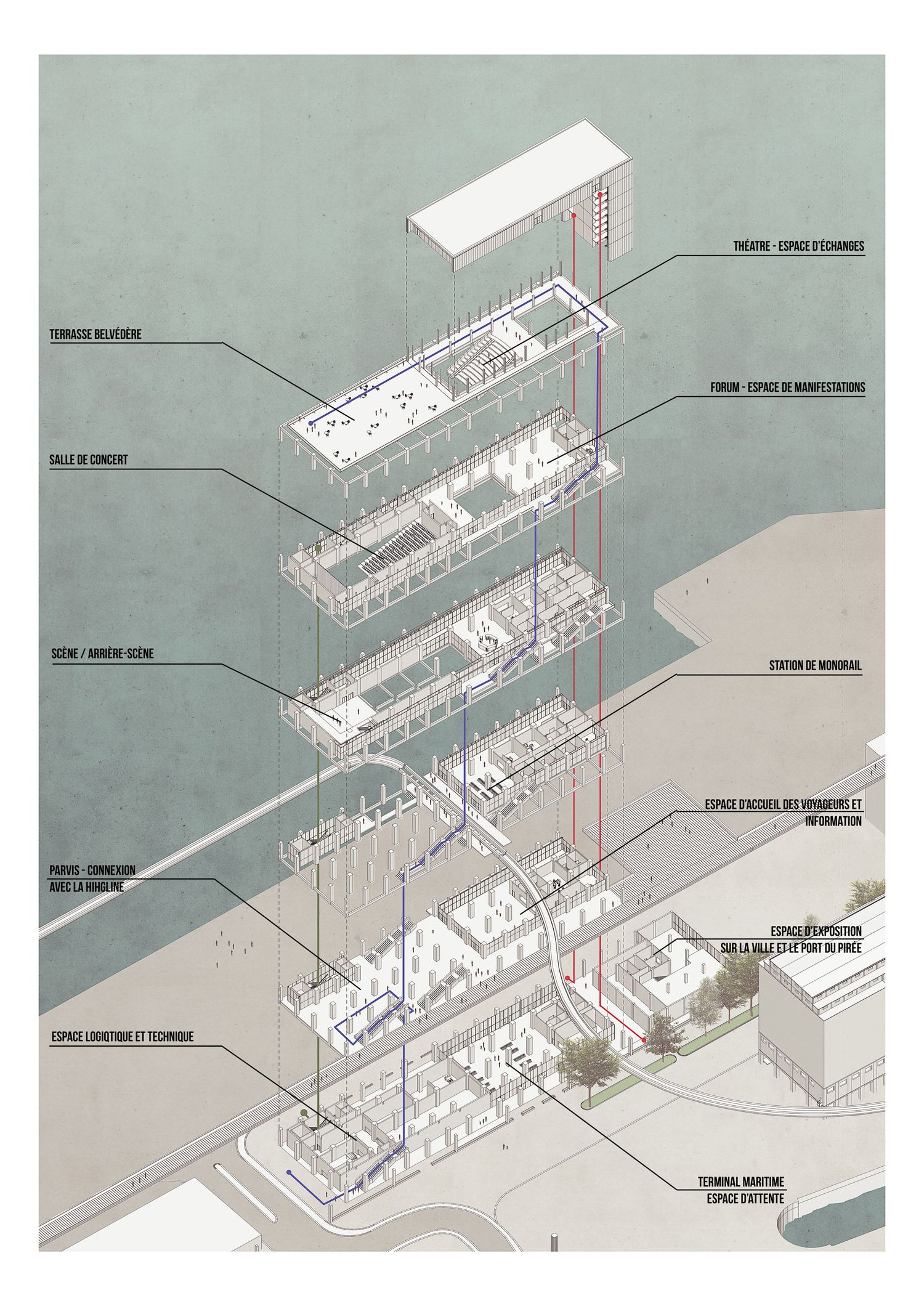
Through its position in the port, Ietionia quay brings together diverse users and issues. It connects passengers, residents and visitors on a central site in the port and in direct contact with the sea.
These users benefit from this strategic location in a very unequal manner and interact very little. Passengers use the embarkation part of the quays in a very punctual but massive way.
The three derelict buildings constitute a support that could offer activities favoring user diversity. Indeed, the future museum will be attractive for visits but it does not resolve the question of passenger reception nor the question of quay appropriation by residents.
In a logic of economy of means and mixed uses, it will concentrate services and different facilities concerning passengers, visitors and residents. It will thus offer services that aim to improve passenger reception, it will propose exhibitions highlighting Piraeus’s identity and it will offer new structures to residents.
The users present in the building will then be connected with the other elements of the site that concern them, the warehouse being located at the heart of Ietionia quay.